Immediate Financing Arrangement (IFA)

Peace Of Mind Has No Price Tag

Honouring the People Who Guide, Support, and Inspire Us
Every year, Canadians celebrate Father’s Day on the third Sunday of June. While the day is traditionally dedicated to fathers, it has also become an opportunity to recognize all the people who have played a fatherly role in our lives—grandfathers, stepfathers, uncles, mentors, coaches, and other father figures who have offered guidance, support, and care.
Fatherhood comes in many forms. Some fathers are the quiet supporters who are always there when needed. Others are the teachers who share life lessons, encouragement, and wisdom. Many father figures help shape who we become through their patience, dedication, and unconditional love.
Across Canada, families celebrate Father’s Day in different ways. Some gather for a barbecue, enjoy time outdoors, share a special meal, or simply make a phone call to reconnect. While traditions vary, the heart of the celebration remains the same: expressing gratitude for the people who have made a positive difference in our lives.
Father’s Day is also a reminder of the values often passed from one generation to the next—responsibility, resilience, kindness, and caring for those we love. These lessons help strengthen families, communities, and future generations.
As we celebrate Father’s Day, we extend our appreciation to all fathers and father figures who provide support, encouragement, and inspiration every day. Your impact is felt far beyond a single day of recognition.
Happy Father’s Day to all who help guide, protect, and care for others.
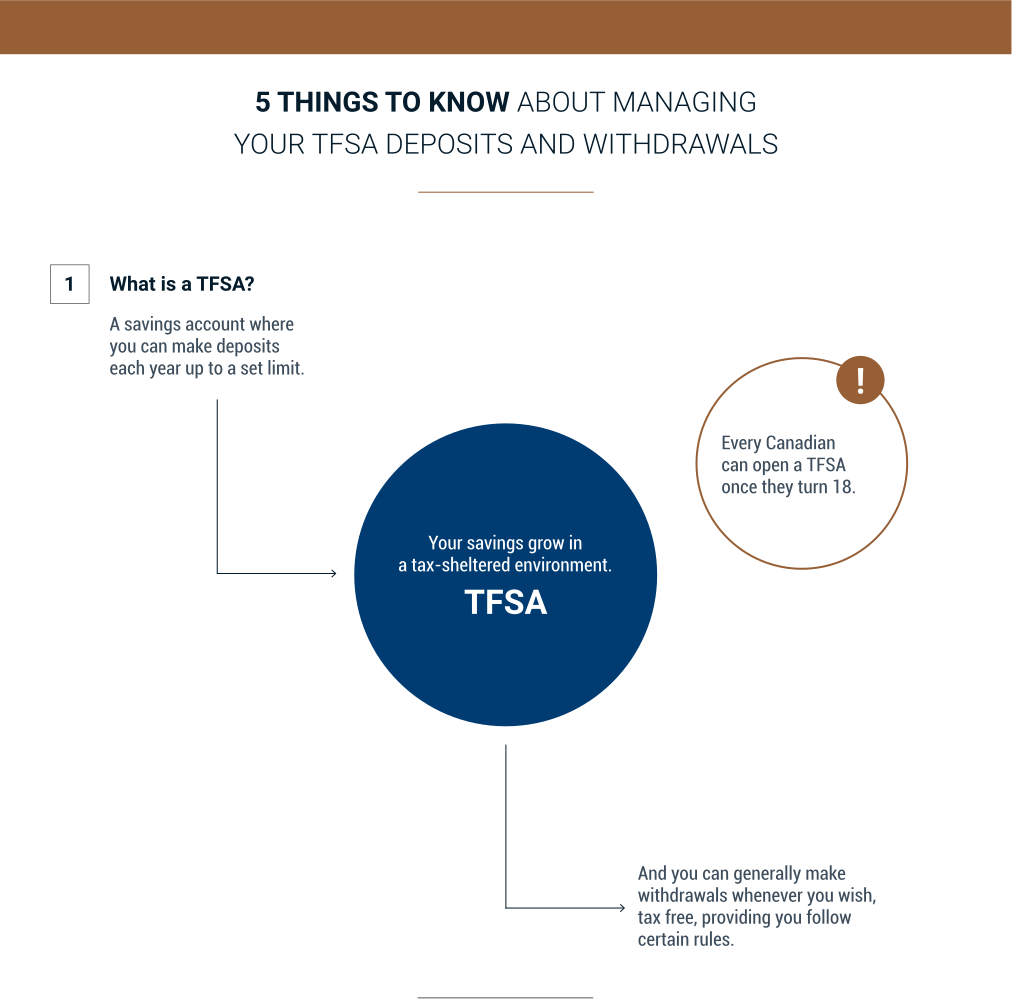
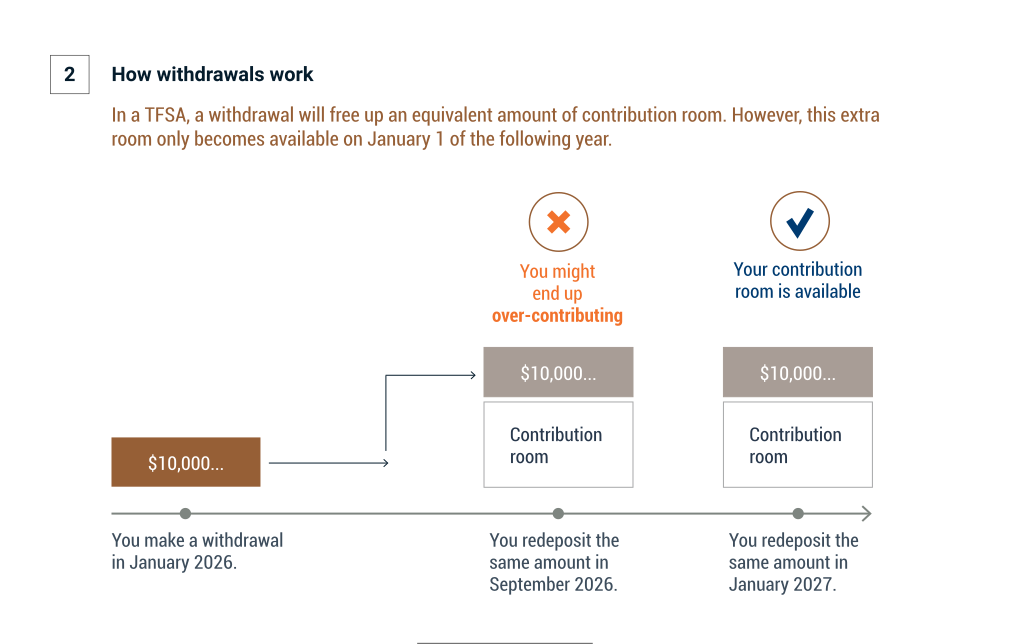
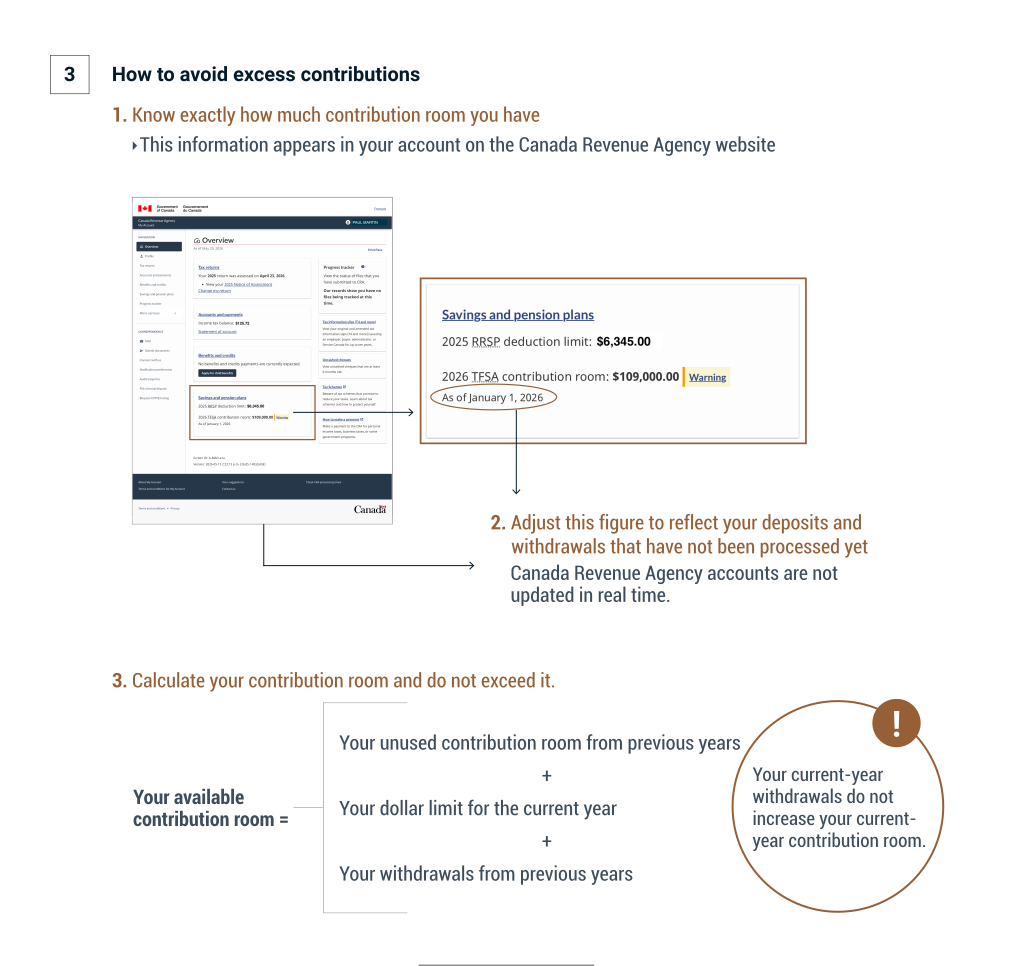
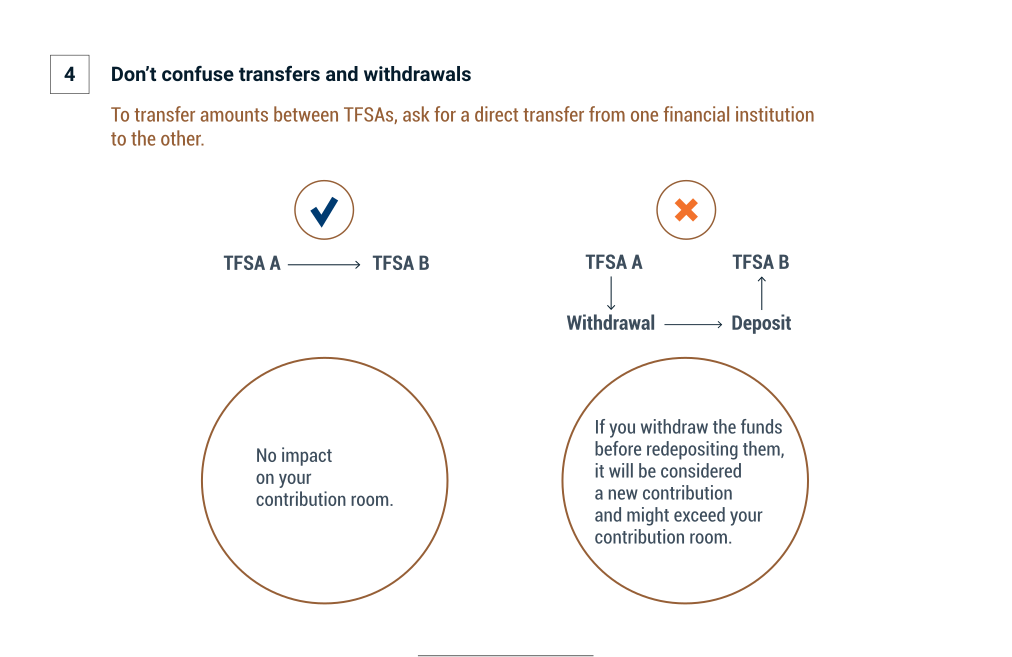
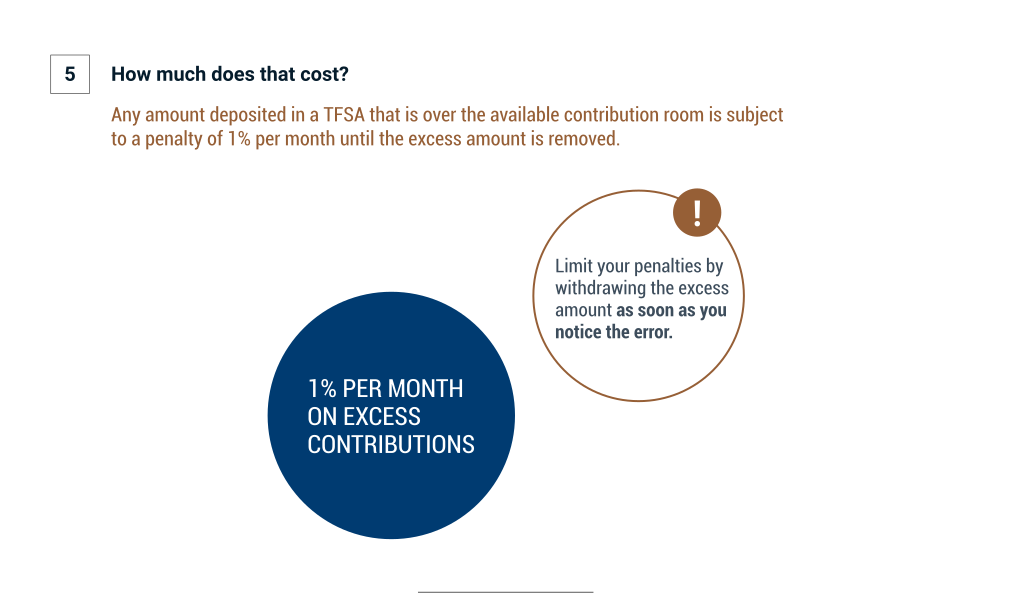
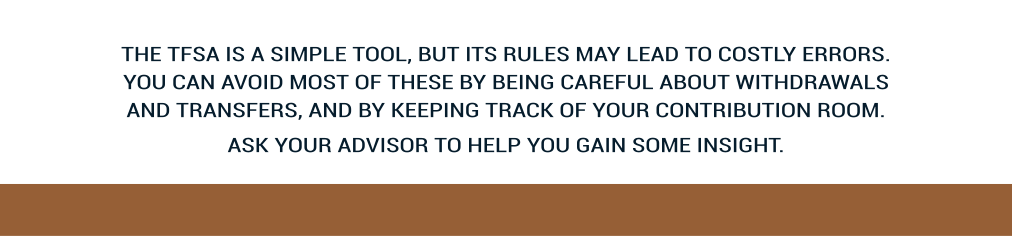
The tax-free savings account (TFSA) is a very flexible tool for building financial wealth within a fully tax-sheltered environment. However, recent statistics show that tens of thousands of taxpayers are paying penalties – often over $1,000 – simply because they didn’t manage their deposits and withdrawals correctly.
Here are five things to keep in mind to to manage your TFSA Deposits and Withdrawals and avoid costly penalties.
Warning :TFSA tax rules may change, and how they apply depends on the specific situation. Conferring with your advisor is recommended.

When it comes to savings and investments, retirement often signals a transition from the “accumulation” phase to the “distribution” phase. Indeed, most people stop contributing to their retirement savings once their working life is over, and start using this money to provide an income.
At that point, it would seem logical to minimize portfolio risk to protect the precious accumulated wealth, even if it means settling for lower returns. But is that really the only option? Here are a few discussion points to help you make up your own mind.
Factor 1: The future lasts a long time
The first point to consider is the fact that in the past century, life expectancy has soared. These days, it’s not unusual for retirement to last 25 or 30 years, or more. So a person’s accumulated savings have to provide an income for all that time.
What does that mean in practical terms? Imagine a 65-year-old who has saved a million dollars in retirement capital and would like to withdraw an annual income of $50,000, indexed at 2% per year. Based on these simplified assumptions, an average annual return of about 5.5% would be required for the person’s savings to last until age 95 (note that for simplicity, taxes have not been factored into this equation, even though they could have a significant impact in a real-world situation).
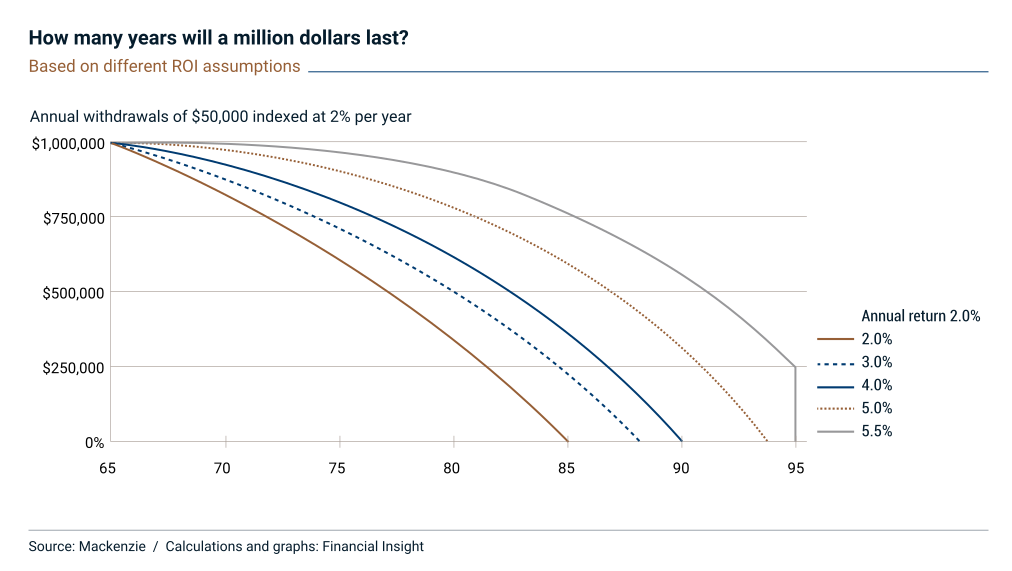
Do you think that would be easy to achieve? Keep reading.
Factor 2: Risk
The second point to think about is the type of portfolio needed to generate the required returns. Would it be a conservative portfolio or, conversely, one highly exposed to market volatility?
Based on the Institut de planification financière’s projection assumptions (which can change over time), it would be reasonable to expect an average annual return of 2.4% for short-term investments, 3.4% for fixed income securities (considered safe), and 6.6% for Canadian and U.S. equities (considered riskier). So, to achieve an average annual return of 5.5%, and assuming the portfolio keeps $50,000 in short-term investments, the person in our example would have to invest about 68% of his or her savings in the stock market. This largely equity-based portfolio would thus have a relatively high exposure to stock market swings.
Finding the sweet spot
This example gives a good picture of the dilemma faced by retirees: finding the right balance between the performance they need and the risk they can tolerate. A negative market performance – especially early in retirement when the distribution process is beginning – could play havoc with a portfolio too heavily weighted in equities. On the other hand, if the equity weight is too low, the portfolio might not achieve its performance targets and the capital could be depleted too soon.
So it’s important to evaluate your risk tolerance throughout your retirement. In this regard, an old rule of thumb states that the proportion of equities in your asset mix should equal “100 minus your age.” Thus, someone who is 65 years old should only have 35% of his or her portfolio in equities, and this weighting should gradually be reduced to further protect the capital as the investment horizon diminishes. This rule, now widely questioned, should be used with caution. In our example, the result of applying this “conservative” weighting could result in the capital being depleted shortly before the retiree reaches age 95.
Which brings us back to the question: what’s the appropriate return on investment to aim for in retirement?
Getting your risk profile right
Clearly, the answer depends on your income requirements and the amount of risk that your personal situation allows you to tolerate.
For example, if the retired person in our example only needed to withdraw $40,000 a year from savings instead of $50,000, a lower return – and thus a lower-risk portfolio – could be enough to provide income to age 95.
Similarly, if you can rely on benefits from a private or public pension plan, your personal savings will play a different role in your retirement income, and you might assess the risk-return profile of your assets in a different light.
The distribution plan
Distribution planning is an important – and complex — operation. What are your needs and how will they change? What level of risk can you tolerate, and how will this tolerance change as you age? Are you planning to leave a legacy for your heirs? And so on.
So the answer to the question of what return you should aim for in retirement is a personal one. And a conversation with your advisor is a good place to start looking for yours.
Note:
The assumptions and figures used in this article are based on historical data and reliable sources; however, past performance does not guarantee future results, and investing in the market always involves risk.
Business owners are used to juggling all kinds of business risks: economic environment, labour shortage, supply chain, interest rates, regulatory framework… But one of the biggest risks is sometimes overlooked: the risk associated with the organization’s key personnel – starting with the owners themselves.
No one would ever wish this, of course, but the risk of something taking an owner or key employee out of the picture is very real. It can result in disrupted operations, put pressure on liquid assets, create uncertainty for business partners and creditors, and even threaten the company’s continuity.
And that’s where life insurance might make sense.
Four essential roles
When properly integrated with business planning, life insurance can meet a variety of strategic needs.
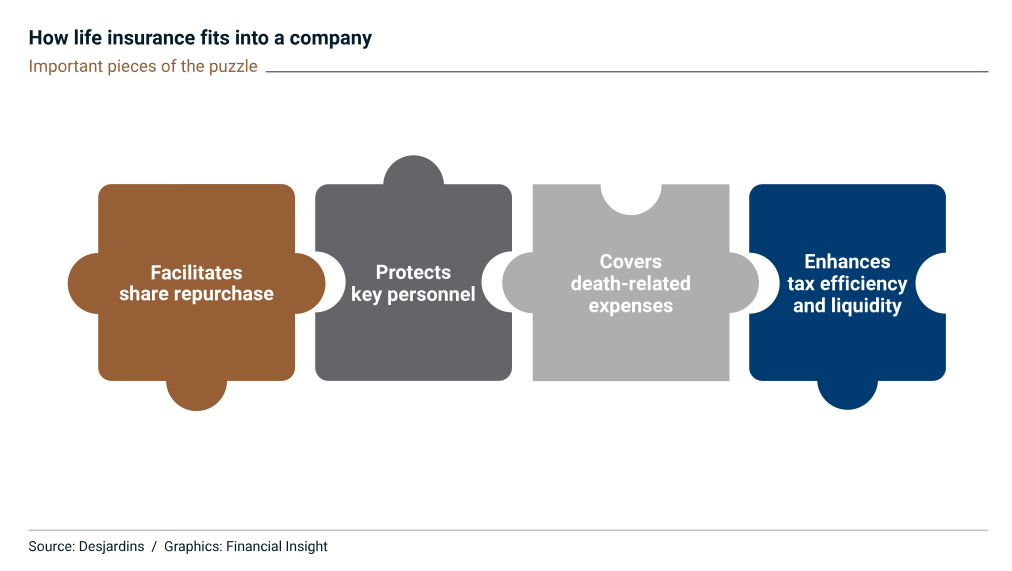
Let’s look at these components in detail.
1. Facilitates share repurchase
For a company owned by several shareholders, the death of one can create a sensitive situation. The surviving partners would usually want to retain control of the company, while the heirs would seek to obtain fair value for the deceased person’s interest. Without a mechanism for dealing with this issue, the situation could create tension, or even force the sale of the company.
A shareholder agreement funded by a life insurance policy can help manage this risk. The death benefit could be used to buy back the deceased’s shares, thus ensuring an orderly transition. The heirs receive financial compensation, while the partners retain control and business continuity is preserved.
2. Protects key personnel
Certain people play a central role in a company’s success: executive officer, founder, technical expert or business development manager, and so on. Their sudden absence can lead to lost revenue, disruption or a reconsideration of some business relationships.
A life insurance policy for a “key person” can provide the company with capital in the event of that person’s death. This cash can be used to buffer the short-term financial impact, finance the recruitment or training of a replacement, or reassure creditors and partners. This can help to stabilize the business during a difficult time.
3. Covers death-related expenses
The death of a business owner can also involve heavy financial obligations. These costs must often be paid on short notice, which can put pressure on the financial resources of the business or the estate.
Life insurance is a way of quickly freeing up the funds required to cover these expenses, be they taxes, legal fees or other costs associated with settling the estate. This helps to avoid the hasty sale of assets and preserve the estate’s value.
4. Enhances tax efficiency and liquidity
When life insurance is owned by a business, it can provide tax benefits at the time of the death. In general, the insurance payout is not taxable and can, under certain circumstances, be added to the capital dividend account (CDA). This could potentially allow for the payment of non-taxable dividends to the shareholders.
As well, in some circumstances, permanent life insurance can provide tax-sheltered capital growth within the policy, without generating taxable investment income. This can help reduce the impact of the “passive income” rules, which can increase the tax burden when investment income exceeds certain thresholds.
Beyond these considerations, life insurance offers a predictable source of cash, available when it is needed most.
An essential component of sound management
Clearly, then, life insurance can form part of an overall strategy, complementing other tools designed to provide for the company’s longevity or succession. Whether to ensure business continuity, protect the partners or cover specific financial obligations, it can transform a distressing event into an organized transition.
That said, many factors must be taken into account when implementing this tool: business structure, shareholder agreement, long-term objectives, tax considerations, etc. The advisor plays a central role. He or she can help to identify needs, structure a tailored solution and ensure that it remains appropriate over time, as the business grows in value.